
Trinity Exam Preparation is a Syllabus, Not a Hobby.
Guitar, Keyboard, and Music Theory lessons leading to official Trinity College London examinations give young learners visible milestones, authentic musicianship, and an accredited international standard.
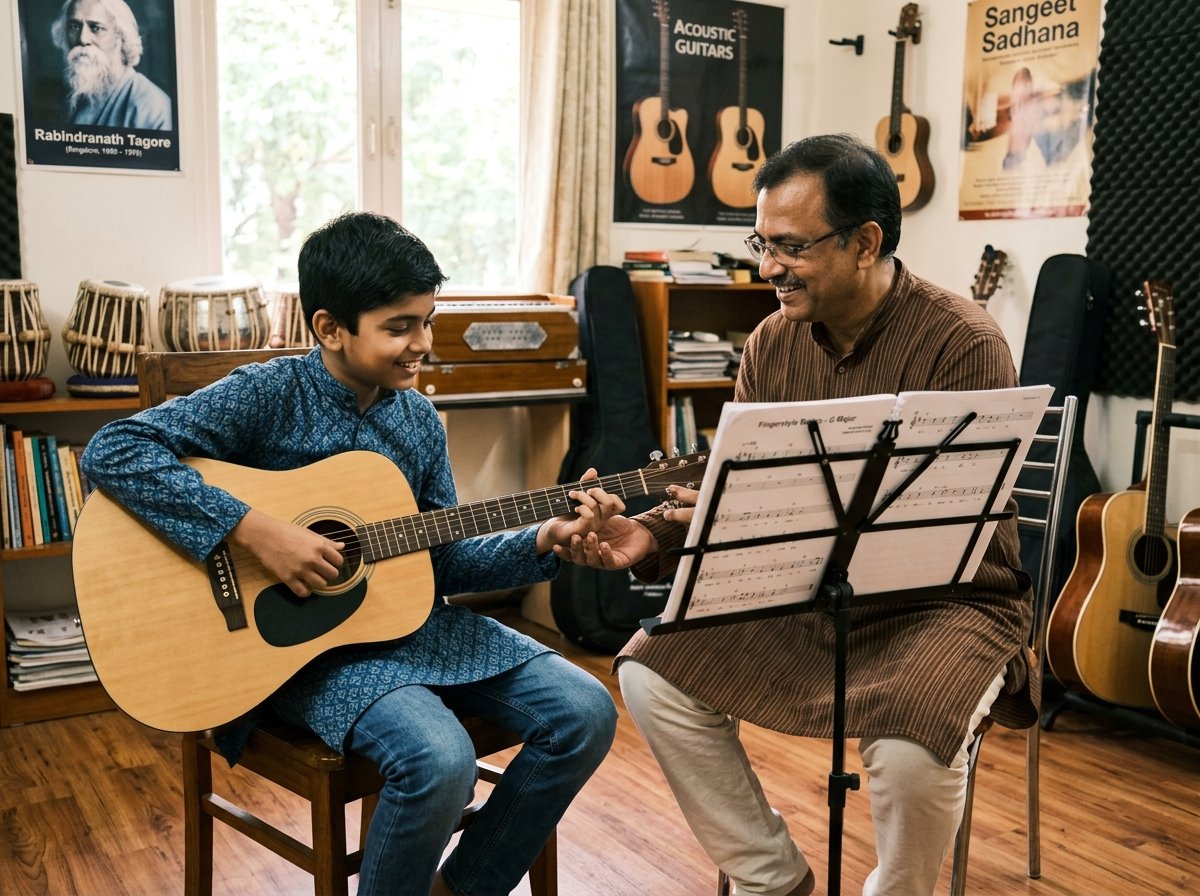
The Three Pillars of Our Music Pathway
Most local classes teach disconnected songs by rote. We teach complete musical literacy from day one so students can read, interpret, and perform any piece.
Graded Repertoire Pieces
Students master 3 contrasting performance pieces chosen from the official Trinity syllabus, developing refined touch, dynamic expression, and authentic musical phrasing.
Technical Exercises & Scales
Scales, arpeggios, and finger agility drills build permanent muscle memory and hand independence that casual video-tutorial strumming never develops.
Supporting Tests (Ear & Sight)
Aural recognition, sight-reading, and improvisation ensure the learner understands the music they produce rather than just memorising mechanical hand positions.
The Graded Milestones Roadmap
Every grade represents a defined level of international musical competency. We evaluate your child before enrollment to recommend the appropriate starting tier.
Initial to Grade 3
Foundation Musicianship
Establishes clean hand posture, finger positioning, reading standard music notation, basic major/minor scales, and simple rhythm division.
- 3 Graded performance pieces
- Basic scales & arpeggios
- Pitch and rhythm aural drills
Grade 4 & Grade 5
Intermediate Mastery
Develops expressive tone, tempo control, modal scales, two-octave arpeggios, syncopation, and intermediate sight-reading accuracy.
- Challenging multi-part repertoire
- Grade 5 Theory Co-Requisite
- Improvisation & musical dialogue
Grade 6 to Grade 8
Advanced Repertoire
Concert-standard pieces, nuanced phrasing, advanced harmonic analysis, polyphony, and comprehensive performance preparation for high-level examiners.
- Virtuosic concert repertoire
- Advanced harmony & transposition
- UCAS tariff points eligible (UK)
Hybrid Delivery: How It Works in Practice
Designed to balance intense hands-on physical coaching with the scheduling ease of interactive digital theory workbooks.
Music Theory & Notation
Weekly small-group digital theory classes covering rhythm division, staff notation, key signatures, and time meters. Students complete structured digital exercises from home with screen-annotated feedback.
- Zero commute time needed for weekly notation drills
- Prepares directly for Trinity Written Theory Exams
- Weekly homework review via WhatsApp student portal
Practical Instrument Coaching
In-person sessions at our studio where tone production, finger pressure, plectrum attack, keyboard touch, and live acoustic response are observed and shaped directly by the mentor.
- Immediate physical posture and wrist alignment corrections
- Mock exam rehearsals in a distraction-free studio room
- High-end acoustic & digital instruments available on site

Rahul Deshmukh
10+ Years Coaching • 95% Trinity Exam Distinction/Merit Rate
"When a child passes their Grade 1 or Grade 3 exam, their posture changes. They realise they didn't just learn a temporary party trick — they mastered an internationally benchmarked discipline. That pride stays with them forever."
Transparent Exam Fee Policy
Tuition fees charged by Passion2Skill cover all instructional hours, rehearsal studio access, and internal mock assessments. Official exam registration fees are set independently by Trinity College London and are paid directly when registering for your designated exam session.
Find Out Which Grade Fits Your Child
Send us a quick WhatsApp message with your child's age and previous instrument exposure. We will suggest an entry point and book an introductory skill assessment.